
Ranked matchmaking
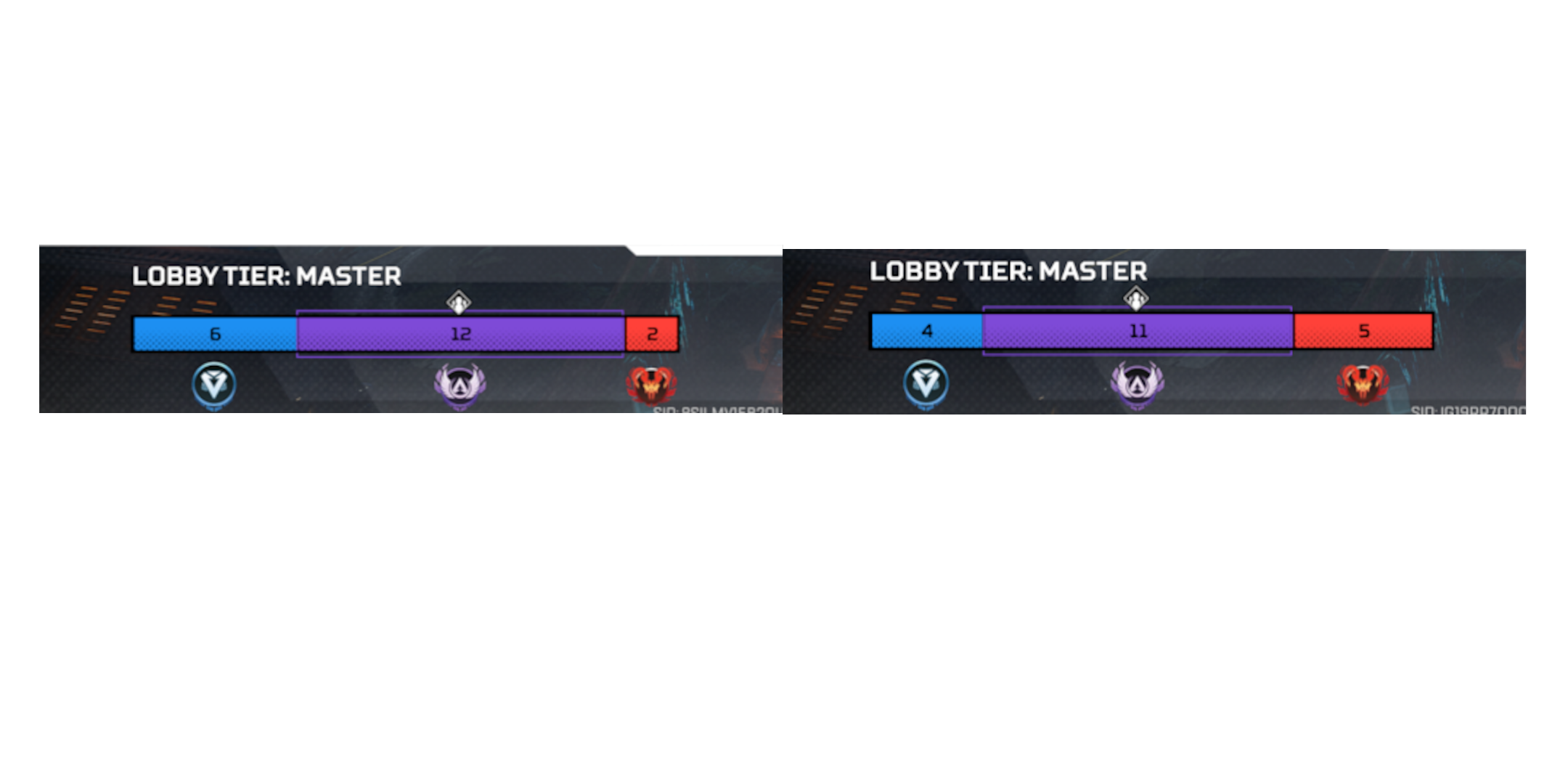
More red does not mean more Predators
Both lobbies pictured above contain six Predators, 36 Masters and 18 Diamonds. Redistributing those players changes the squad markers from two Predator squads to five. Source and image: EA/Respawn, September 30.
Ranked matchmaking
The social cost
EA reports little improvement in match outcomes. Its return-rate comparison with Seasons 26-28 shows Diamond premades at -20.9%, duos at -16.6%, and solos at -0.6%. These are cohort comparisons, not a claim that 20.9% of all Apex players quit.

Ranked matchmaking
Our take: count the players, then judge the fight
A lobby screenshot needs a denominator. A squad count answers how widely a rank is spread across teams; a player count answers how many opponents hold that rank. Neither, on its own, measures how difficult your next fight will be.
For us, a useful matchmaking display should distinguish individual rank, team composition and coordination. A single warning color compresses those into one signal. It is easy to read quickly, but too easy to overinterpret.
We would judge a future experiment on two separate questions: does it improve the competitive experience for solo players, and can it do so without making ranked less appealing to friends? Solving one by sacrificing the other is not a convincing long-term answer.
This is our interpretation of the official results, not an independent ApexRanked measurement of retention or matchmaking quality.
Ranked matchmaking
What comes next
EA published those Season 31 and 32 Ranked changes in its Ranked Roadmap on October 20, 2026 (summary linked below). Other solo experiments remain possible.
More on Apex Ranked